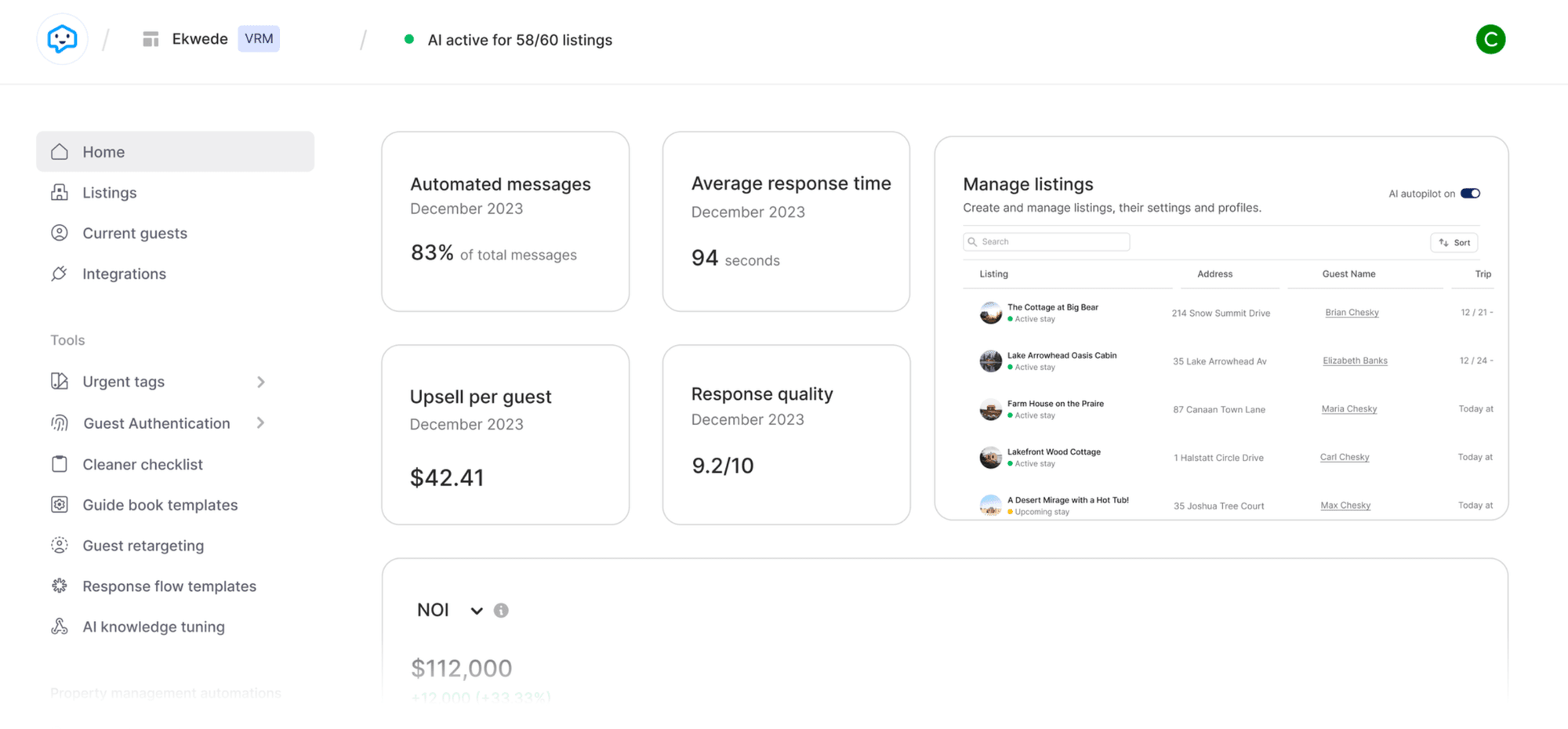
STRAI: AI Guest Agent with Per-Property Knowledge for Hospitality
A guest messages at 11 PM asking about early check-in. Another at 6 AM wanting to know which towels are provided. A third mid-booking, confirming the hot tub works.
Three messages. Three listings. All need answers within minutes – because Airbnb's algorithm rewards fast response times, and guests who wait book somewhere else.
STRAI's founder had managed short-term rental properties long enough to see the pattern: 80% of guest messages ask the same kinds of questions, just for different listings. Check-in codes, WiFi passwords, parking instructions, local restaurant recommendations. The answers already exist – scattered across house manuals, listing descriptions, and the host's memory. Getting those answers to guests at 3 AM was the problem.
He'd tried hiring virtual assistants. They needed training for every new listing, made mistakes when details changed, and still couldn't cover overnight hours without premium rates. The approach didn't scale past 15–20 properties without eating into margins.
Together with our team, he set out to build what property managers actually needed: an AI agent that knows each listing's details, responds in the host's voice, and knows when to stay silent and call a human instead.
The Problem: Communication That Doesn't Scale
Before STRAI, multi-property operators hit a ceiling that had nothing to do with real estate.
Response time drives revenue. Airbnb tracks how fast hosts respond and factors it into search ranking. Slow responses push listings down. Guests comparison-shopping send the same question to five hosts – the one who answers first usually wins the booking. After hours, response times balloon. So do lost bookings.
Context differs per listing. A guest at a beachfront apartment needs different information than a guest at a mountain cabin. Generic responses feel impersonal. Each listing has its own check-in process, amenities, house rules, parking situation, and local recommendations. Staff managing 30+ listings can't keep every detail in their head.
Hiring doesn't solve the math. Each new listing adds message volume. At 20 listings, one person can't keep up during business hours. At 60, a small team can't cover around the clock. Staff turnover means retraining. New listings mean re-briefing. The cost of fast, personalized communication scales linearly with properties – but margins don't.
Urgent issues hide in routine noise. When a pipe bursts at 2 AM, that message sits in the same inbox as "what's the WiFi password?" Without a system to distinguish the two, either everything gets the same delayed attention or hosts stay glued to their phones permanently.
The result: hosts choosing between their margins, their sleep, and their guest experience. STRAI's founder needed all three.
Building an Agent That Knows Every Listing
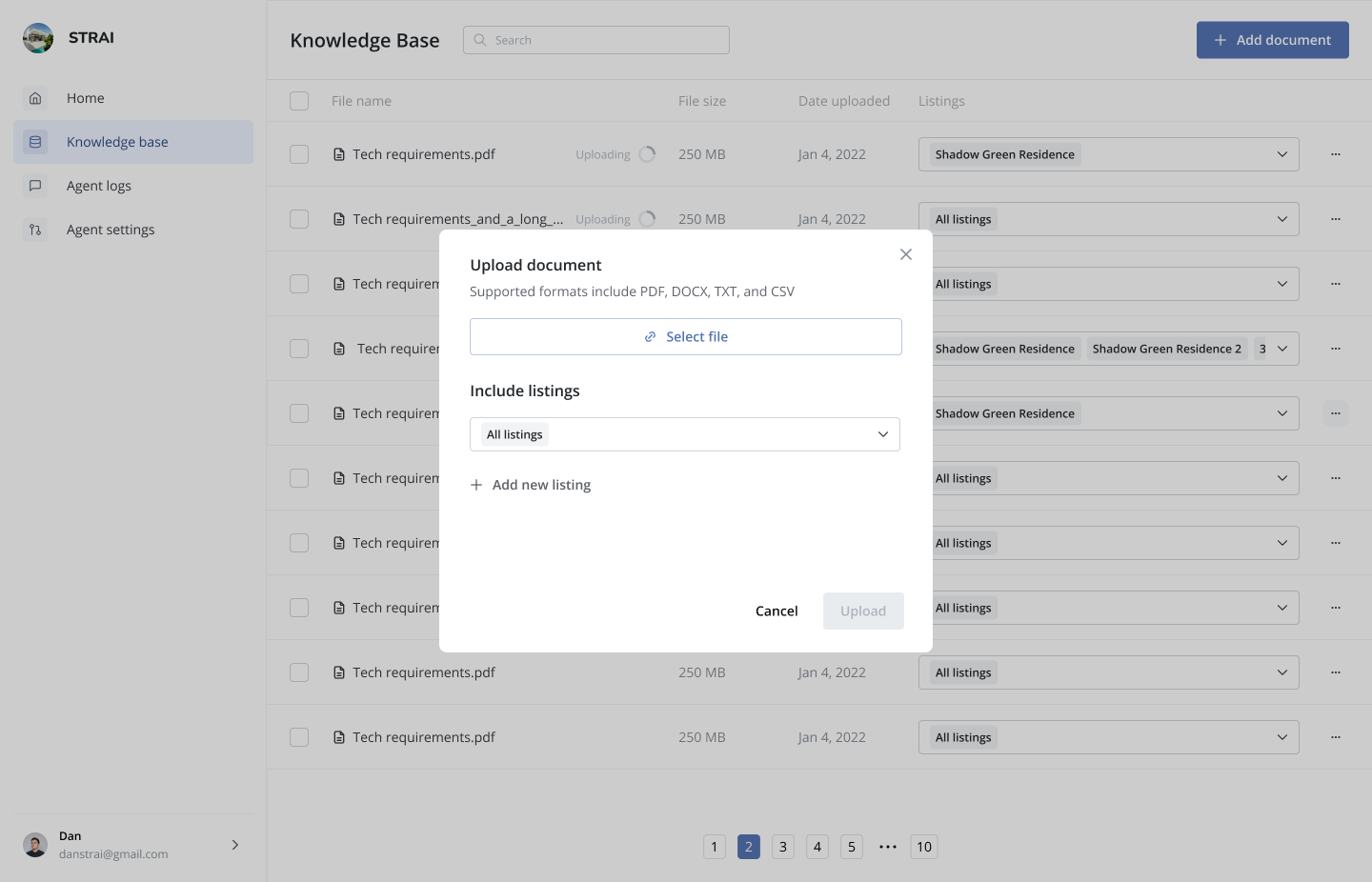
Per-listing knowledge base. Hosts upload documents for each property – house manuals, check-in guides, local tips, amenity lists. The system maps each document to specific listings. When a guest messages about Property A, the agent retrieves only Property A's documentation. A question about parking at the beach house gets the beach house parking instructions, not the mountain cabin's. This sounds obvious. Most solutions don't do it.
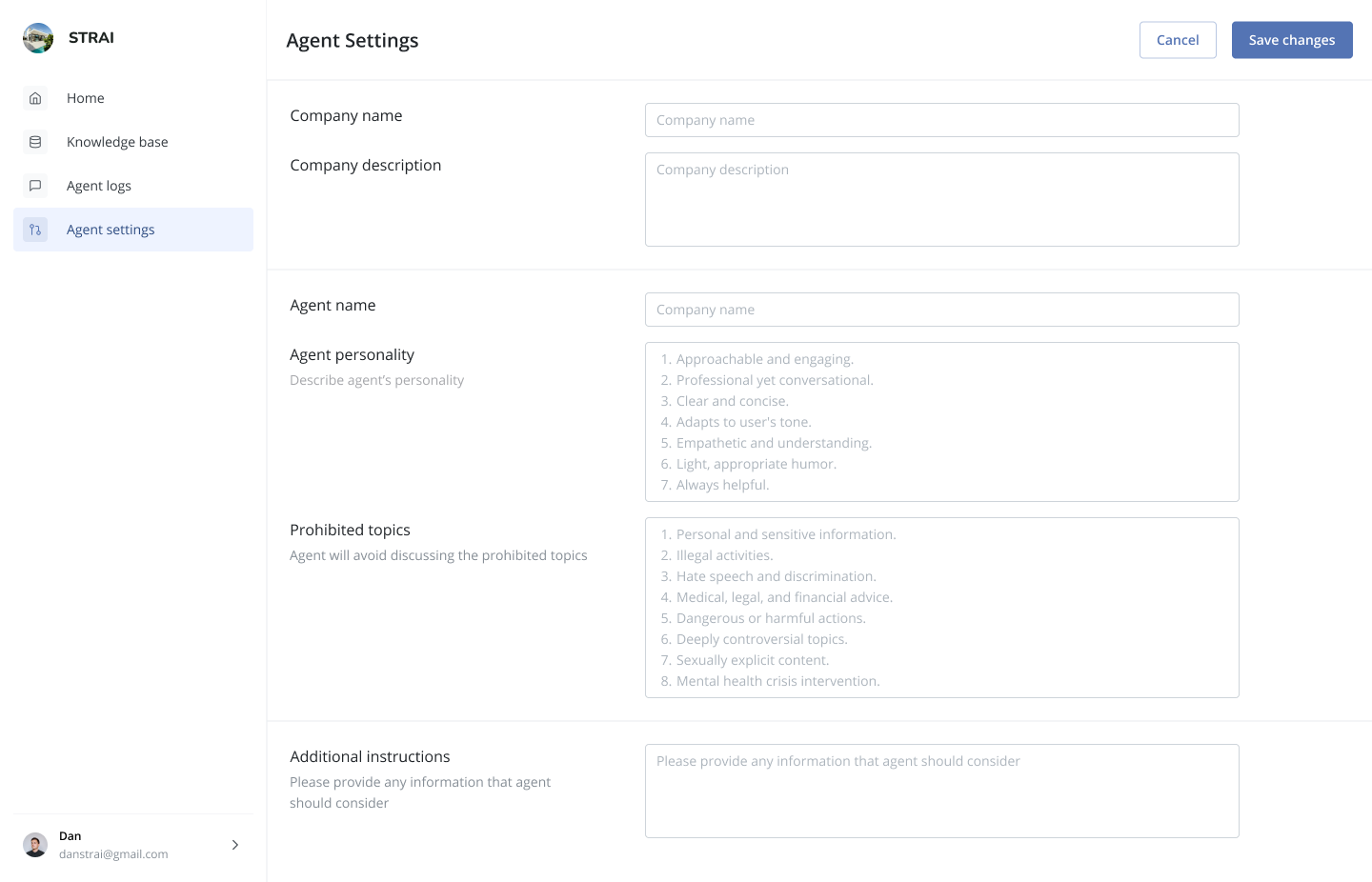
The host's voice, not a robot's. Every operator has a different communication style. A luxury glamping brand writes differently than a budget apartment host. The agent's personality is fully configurable – name, tone, behavior rules, topics to avoid. One STRAI customer set their agent to be "warm and anticipatory." Another wanted "professional and efficient." Same system, different experiences for guests.
Silence when silence is right. This was the critical design decision. The agent doesn't answer when it shouldn't – property damage reports, maintenance emergencies, questions it can't answer accurately. Instead, it immediately notifies the host by email and SMS with the guest's message, the listing, and the reason it stayed silent. The host takes over. The agent doesn't resume until told to.
An agent that responds incorrectly is worse than one that waits. Guests forgive a brief delay. They don't forgive wrong check-in codes.
Conversation memory. The agent reads the full conversation history before responding. A guest who mentioned arriving late three messages ago doesn't need to repeat themselves. Context carries forward, just as it would with a real person.
What Operators Get
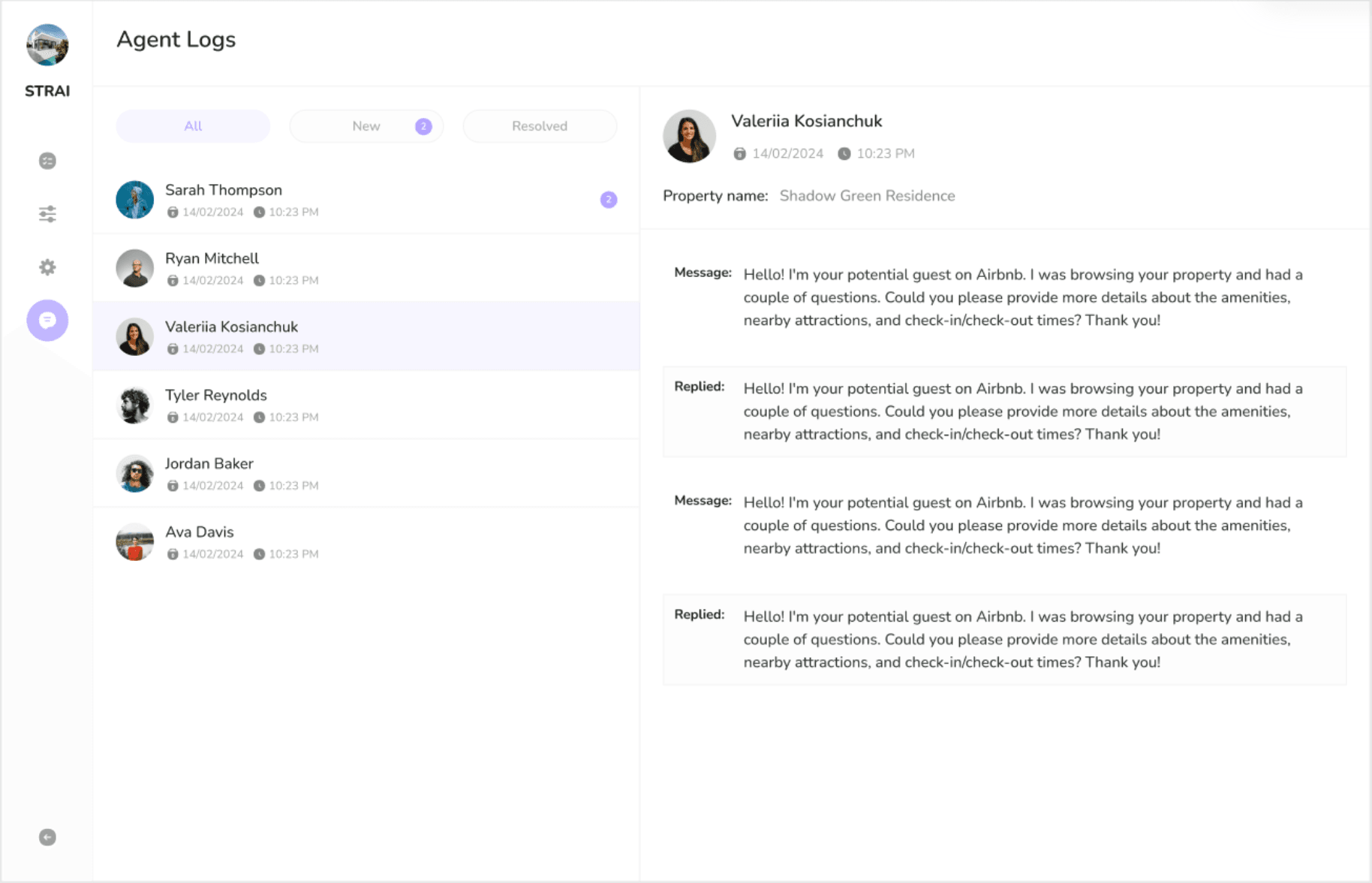
Complete conversation visibility. Every interaction is logged with the full message thread, timestamps, listing context, and response status. Hosts filter by listing, by date, by status – answered, transferred to human, flagged errors. Each log entry links directly to the Airbnb thread for quick review.
Actionable gaps. Patterns in "transferred to human" logs reveal missing documentation. If the agent keeps escalating questions about late checkout policy, that policy needs to be added to the knowledge base. The system gets smarter as hosts fill gaps. One uploaded document fixes every future conversation.
Economics that work. AI costs run between $0.01 and $0.10 per message. For a 60-listing operation handling hundreds of guest messages daily, total operating cost stays well under what a single part-time employee costs – and the agent doesn't need weekends, training, or overtime pay.
How We Worked Together
Domain expertise shaped every decision. The founder's property management experience defined what mattered: answers that maintain guest relationships and protect the brand. He knew which questions guests ask repeatedly, which situations require a human touch, and what tone converts inquiries into bookings.
We collected real Airbnb conversations to build the initial test scenarios. Edge cases from actual guest interactions – not hypothetical ones – informed the agent's behavior rules, escalation triggers, and response quality standards.
Agent-first development. We built the messaging agent before writing any dashboard code. It processed real conversations, generated real responses, and exposed real limitations before we invested in the interface. This meant every dashboard feature addressed an actual need.
Three iterations, eight weeks to production.
- Weeks 1–2: Core agent – document retrieval, conversation context, message processing, human handoff with email and SMS notifications. Working on real Airbnb accounts by end of week two.
- Weeks 3–7: Customer dashboard – knowledge base management with per-listing document mapping, agent personality configuration, conversation logs with filtering, notification settings.
- Week 8: Admin tooling for customer account management and onboarding.
Weekly updates, working software throughout. The founder could see and test functionality each week. Feedback from real usage – not mockup reviews – drove priorities. When conversation logs revealed that the agent struggled with certain question types, we adjusted the retrieval pipeline before building more dashboard features.
Honest about constraints. We were direct about what the AI could and couldn't do reliably. Some question types needed more context than the knowledge base alone could provide. Some edge cases required human judgment that no prompt engineering would fix. These honest conversations shaped the escalation system – and prevented the kind of overconfident automation that damages guest relationships.
Results
The platform launched with the founder's own property portfolio and onboarded additional operators in the following weeks.
Consistent sub-two-minute response times across all hours. The 11 PM check-in question gets the same response speed and quality as a 2 PM inquiry. Airbnb's search algorithm rewards this consistency directly.
Majority of messages handled without human intervention. Routine questions – directions, amenities, check-in procedures, WiFi, local recommendations – resolved automatically. Hosts focus on the exceptions that actually need their judgment.
New listings onboarded in minutes, not days. Upload the house manual, map it to the listing ID. The agent handles guest communication from there. No staff training, no briefing documents, no shadowing period.
The agent handles the predictable. Humans handle the exceptions. The system knows the difference.