Casegen AI: Zero Missed Calls. Zero Missed Cases.
When a potential client calls a law firm at 9 PM and reaches voicemail, they don't leave a message. They call the next firm. In personal injury, the attorney who answers first usually wins the case.
Anthony Flores watched this happen for 15 years. Running a legal marketing agency, he'd help firms generate leads – then watch those leads disappear into voicemail after hours. Milad Alipour lived the same problem from inside the firm. As a practicing personal injury attorney, he spent hours screening calls instead of working cases, knowing that every call he missed might be going to a competitor.
They founded Casegen with a specific bet: an AI voice agent could handle intake as well as a trained paralegal – if it was built by someone who actually understood legal intake. Anthony brought the software and marketing expertise. Milad brought something harder to find: he knew exactly which questions separate a strong case from a weak one, which follow-ups reveal what callers won't volunteer, and how the conversation should flow.
Together with our team, they set out to build something that barely existed – a voice AI that could think like an attorney.
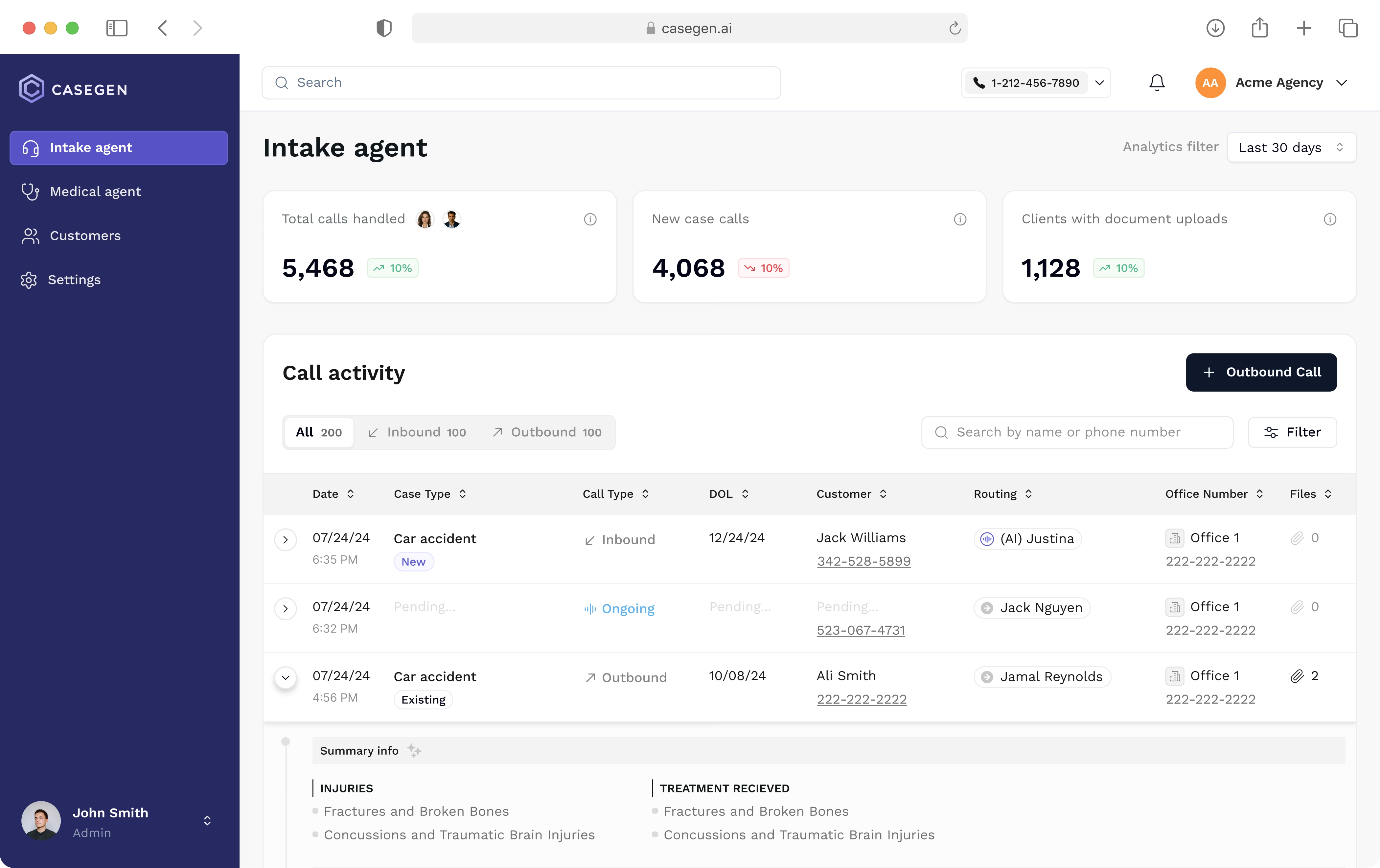
The Problem: Missed Calls, Lost Cases
Before Casegen, law firms struggled with five critical intake problems.
Manual bottlenecks. Attorneys and assistants personally answered every call, spending hours screening clients instead of working on cases. High-value legal professionals were doing administrative work.
After-hours gaps. Nights, weekends, and holidays meant missed calls. Potential clients calling outside business hours reached voicemail or no answer.
Inconsistent quality. Intake varied wildly depending on who answered. Some staff forgot critical questions. Others collected incomplete information. One attorney described having eight people answering phones – and they still couldn't determine which calls were worth transferring.
Disconnected systems. No centralized way to review calls, transcripts, or case details. Attorneys wasted time piecing together information from notes, recordings, and memory.
Language barriers. Firms needed to serve clients fluently in both English and Spanish – many receive a majority of calls in Spanish. Hiring bilingual staff helped but didn't solve the consistency problem.
The result: missed cases and attorney time spent on intake instead of legal work.
Building an AI That Thinks Like an Attorney
Most voice automation fails in legal because it treats law like any other industry. Legal intake is different – we built for those differences.
Domain expertise baked in. Conversation flows designed with Milad, a practicing PI attorney. Every question reflects how an experienced lawyer thinks about case qualification.
Empathy under pressure. Callers are distressed – in pain, confused. The system acknowledges the situation and modulates tone based on emotional context.
Compliance built in. Jurisdiction-aware disclosure for 11 all-party consent states. Comprehensive logging for discovery.
Agent-first development. Instead of building UI then adding AI, we built the agent first. Tested with real calls. Refined the flow with design partners before writing dashboard code.
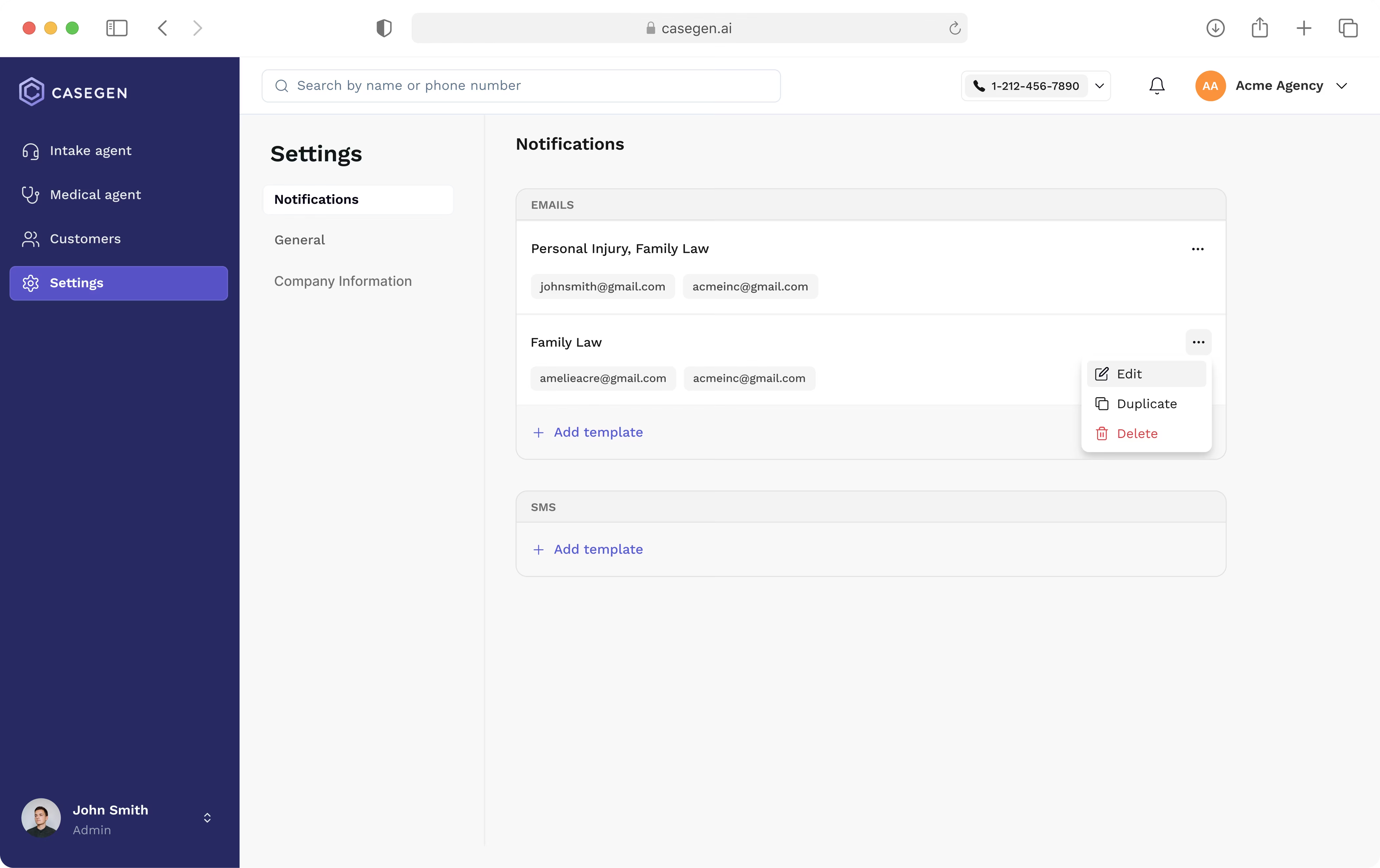
The first iteration was just a stenographer – transcribe, summarize, email. Validated infrastructure before adding complexity. Only after the agent worked reliably did we build the portal.
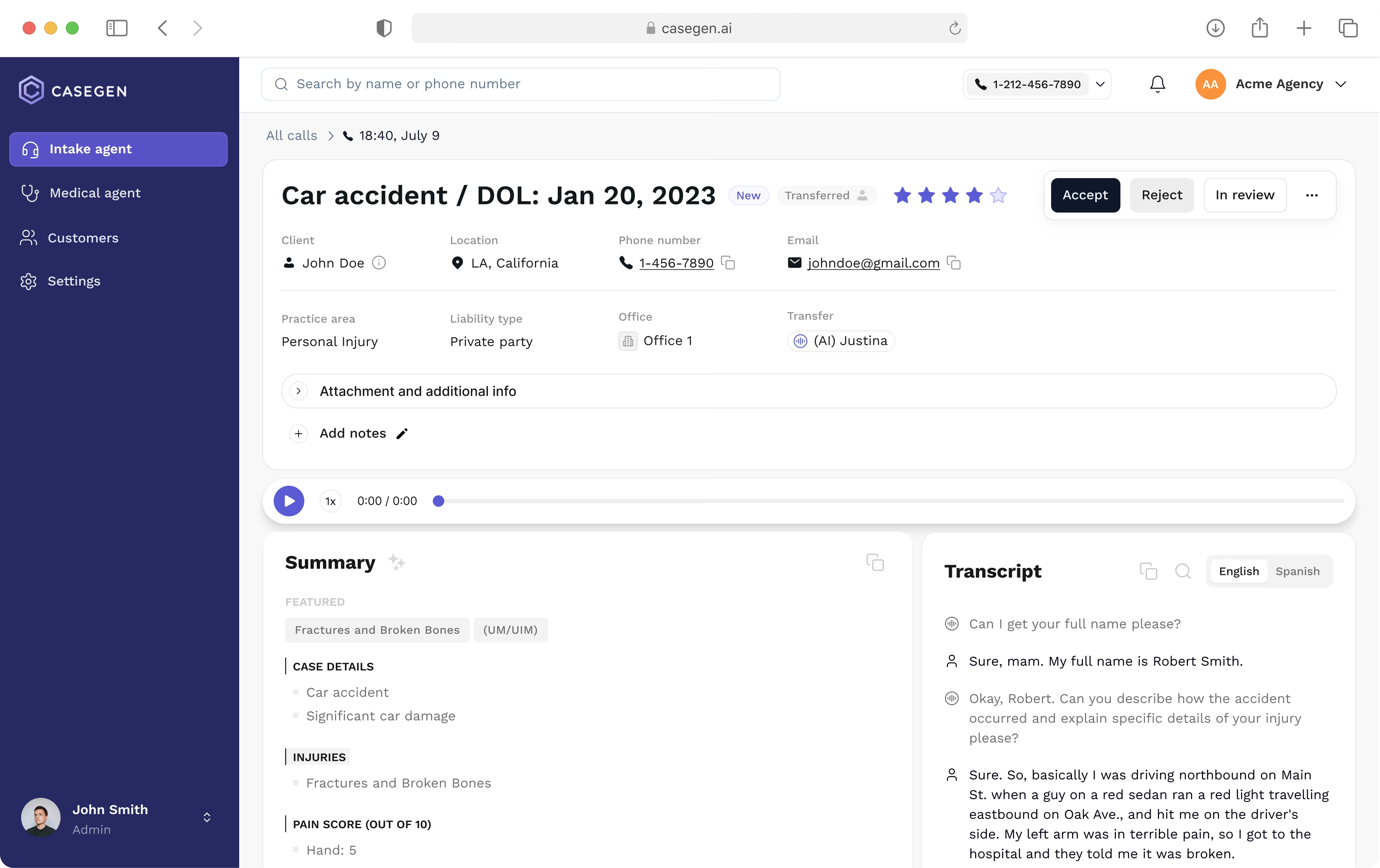
How Intake Calls Work Now
Call classification. The agent identifies whether it's a new case, existing client, or other inquiry and routes accordingly.
Dynamic case intake. For new cases, the agent asks the right questions in the right order – adapted to the case type. Auto accident calls get different questions than medical malpractice. The agent captures contact information, accident details, injuries, treatment status, and the information attorneys need to evaluate the case.
Bilingual conversations. The system detects language early in the call and conducts the entire intake in English or Spanish – tested across regional dialects including Mexican, Caribbean, and Central American Spanish. Additional languages are in development.
Document collection. During the call, the system sends an SMS with a secure upload link. Callers can submit photos of the accident, police reports, medical records, insurance cards. Vision AI analyzes uploaded documents and adjusts case scoring in real-time.
Case scoring. Based on the conversation and documents, the system assesses case strength – fault clarity, injury documentation, insurance situation. Attorneys receive a preliminary score with their notification. The scoring learns from attorney feedback over time.
Intelligent transfers. When criteria are met – high-value case, attorney request, complex situation – the system transfers live to the attorney with full context.
Instant notifications. Attorneys receive SMS and email notifications immediately with case summary, caller information, and a link to full details.
The Architecture Behind It
Voice AI architecture presents a fundamental choice: real-time speech-to-speech or turn-based processing. We chose turn-based – speech-to-text, then language model processing, then text-to-speech. This decision became a core advantage.
Compliance requires audit trails. Legal applications need clear logs of what was said and why the AI responded as it did. Turn-based architecture produces text at each stage, making the conversation fully auditable.
Cost scales better. Real-time models re-process full context on each turn – expensive for longer conversations. Turn-based processing keeps per-minute costs low enough to price competitively against traditional answering services.
Modular upgrades. Turn-based architecture allows swapping individual components as better models emerge. New models can be evaluated against existing ones for specific tasks without rebuilding the entire system.
Multi-provider resilience. The biggest technical challenge: building an orchestration layer that switches LLM, TTS, and STT providers per company, per agent, per call type at runtime. Automatic fallbacks ensure calls stay stable when third-party services hit rate limits or fail. In production, we handled voice platform concurrency limits, LLM rate spikes during peak hours, and phone number provisioning bottlenecks – problems that only surface at scale.
Per-firm customization. Generic prompts failed in testing – each law firm's intake flow differs significantly. The system uses custom question banks at global, company, and agent levels with dynamic prompt injection. Warm transfers include AI briefing so attorneys receive full context before pickup.
Quality evaluation. LLM-based evaluation framework measures response quality, cost, and latency on every call. Regressions surface immediately rather than through customer complaints.
The stack: Best-in-class providers for voice orchestration, telephony, speech recognition, language models, and observability – selected and integrated based on performance requirements for legal intake.
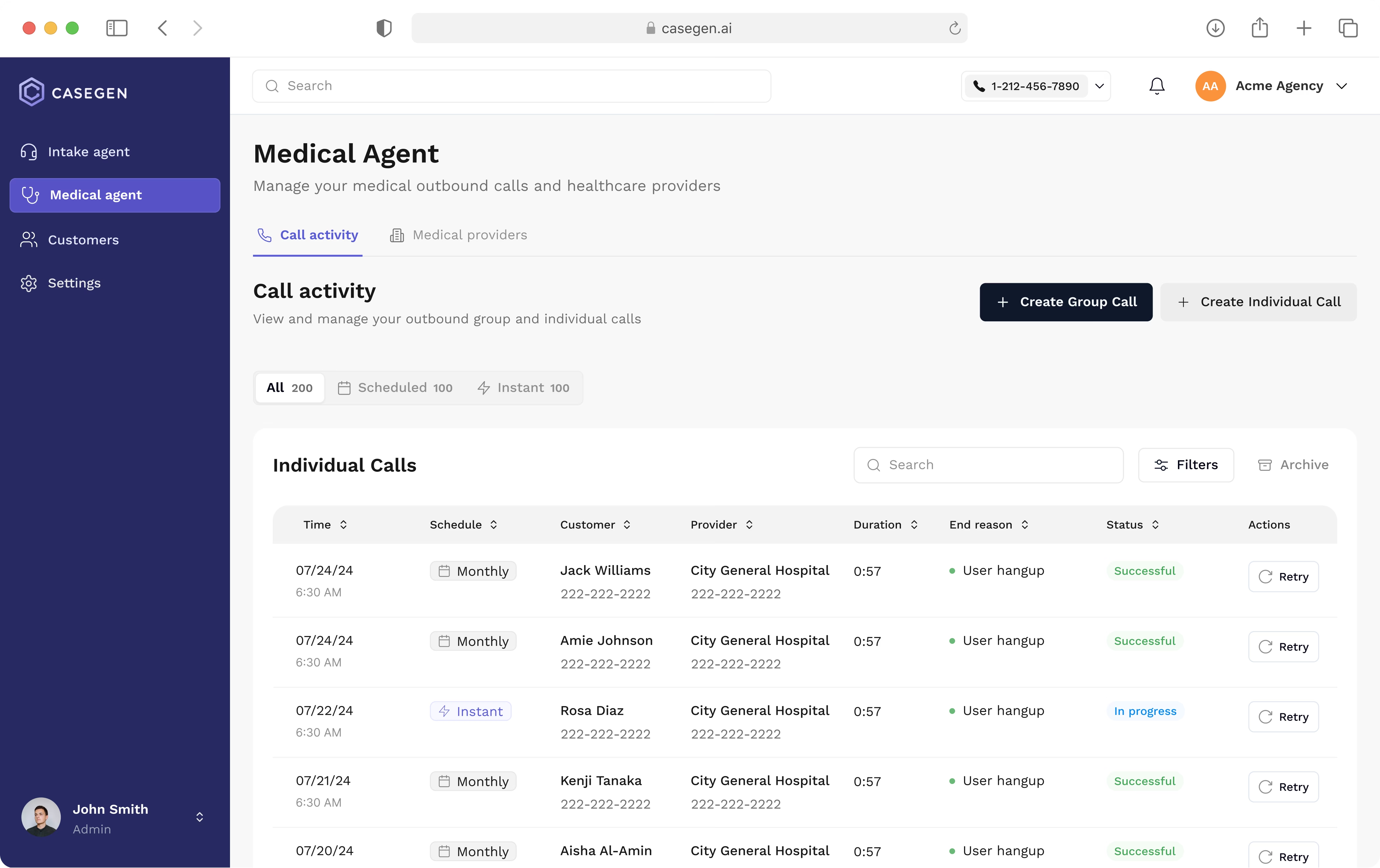
What Law Firms Get
Measured results. The platform handles thousands of calls monthly across client firms with 95% case capture rate. Average response latency: 1.2 seconds. Call classification accuracy: 9 out of 10 calls correctly routed.
Cost efficiency. Law firms report 80-90% cost reduction compared to traditional answering services – handling the same call volume at a fraction of outsourced intake costs.
Complete visibility. One dashboard shows every call: client information, case type, call status, timestamps. Full transcripts, audio recordings, and AI-generated summaries available instantly.
Automated follow-up. Daily digests summarize call activity. Weekly reports track trends. Real-time SMS for urgent cases, email for batch processing.
CRM integration. The platform connects to major legal case management systems. Call information flows automatically into existing workflows.
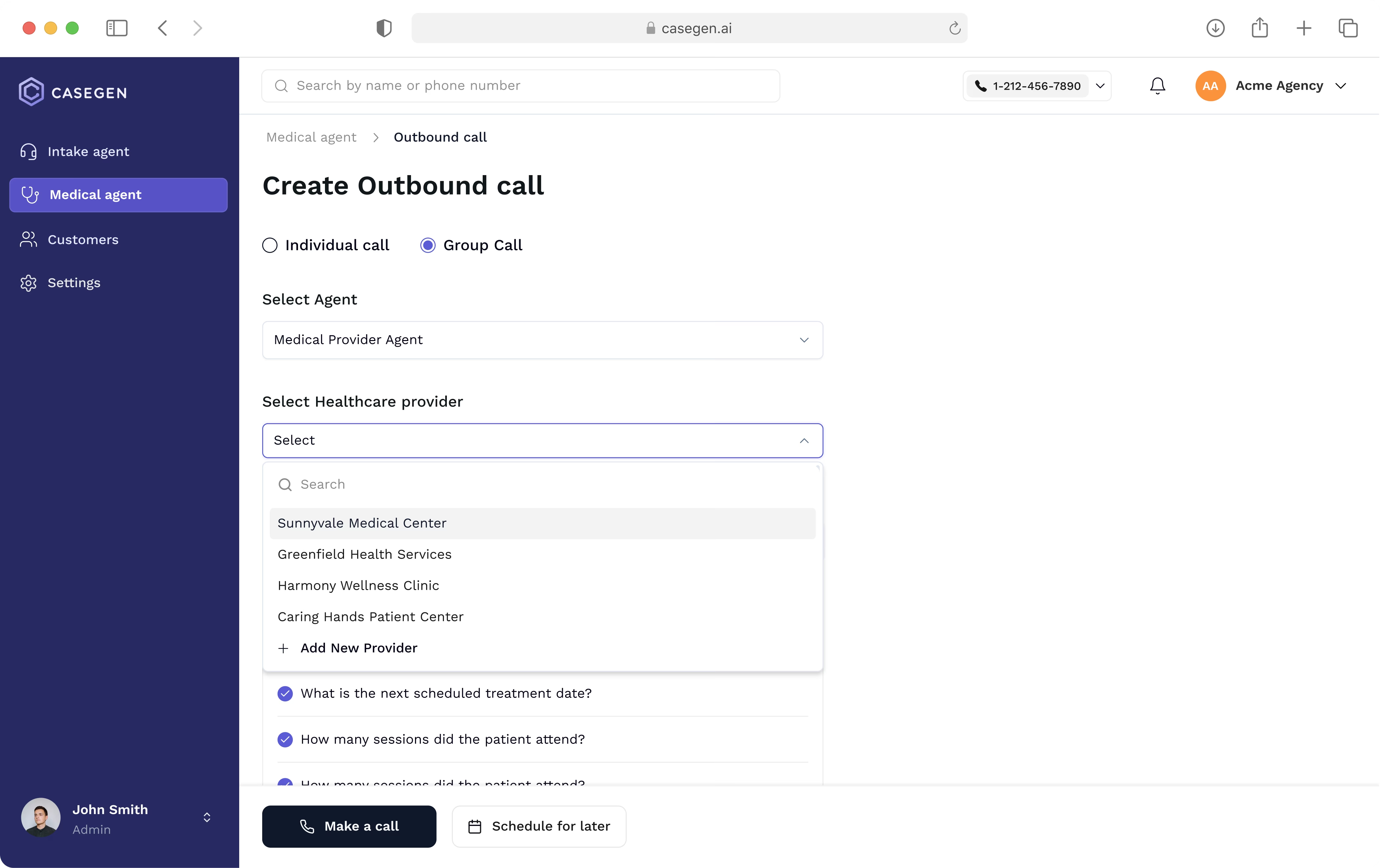
Multiple agent types. The Inbound Intake Agent handles incoming calls 24/7. The Outbound Intake Agent proactively contacts prospects during business hours. A Medical Agent (in development) follows up with healthcare providers to gather supporting documentation.
Spam protection. Intelligent filtering identifies and handles spam calls so attorneys only see legitimate inquiries.
Operational impact. Zero missed leads regardless of time or volume. Consistent intake quality on every call. Attorneys reclaim screening hours for billable work. Firms scale call volume without proportional hiring.
How We Worked Together
Domain expertise as foundation. Milad's attorney perspective shaped every conversation flow. He wrote the qualification questions, defined what signals case strength, and identified the follow-up questions that reveal information callers won't volunteer. We collected real call recordings to build a test dataset covering edge cases – Spanish-language calls, disputed liability scenarios, existing clients, adjusters, and the full range of intake situations.
Agent-first development. We started with a stenographer – just transcription, summarization, and email delivery. Validated the infrastructure worked before adding complexity. Only after the core agent performed reliably did we build the dashboard around it. This meant real calls informed every product decision.
Iterative build process. Four development phases: stenographer, intake agent, customer portal, integrations. Each phase had defined acceptance criteria and a working deliverable. Twice-weekly calls kept alignment tight. Weekly progress reports provided full visibility into hours and progress.
Regression testing with real data. Every change to the AI ran against the full dataset of recorded calls. When we modified prompts or added features, we verified nothing broke across hundreds of test cases before deploying.
Honest technical guidance. We were direct about AI constraints and tradeoffs. Generic prompts across all firms? Tested and failed – each law firm's intake flow differs too much. Real-time speech-to-speech models? Wrong tradeoff for legal – turn-based architecture gives clearer audit trails for compliance and costs less at scale. When the founders asked about features, we explained what was feasible, what would add complexity without value, and what should wait until after launch. Building AI that works means knowing what doesn't.
Production and beyond. Casegen now serves law firms handling thousands of calls monthly. Development continues on Outbound agent capabilities, Medical agent features, and expanded self-service configuration.